Air Conditioning
AC Not Working? (5 Common Causes & Easy Fixes)
If your ac not working has left you sweating through a hot afternoon, the cause is often something simple that you can identify or even fix in a few minutes. Knowing the most common culprits, and when to call a professional, can save you a service call, restore comfort fast, and protect your equipment from bigger damage.
- Quick diagnosis: Learn the five most common reasons a central AC stops cooling.
- Easy fixes: See which issues you can solve yourself and which need a licensed technician.
- Local expertise: Find out why Republic homeowners rely on Jameson Heating & Air for honest, fast service.
Why Air Conditioners Stop Cooling
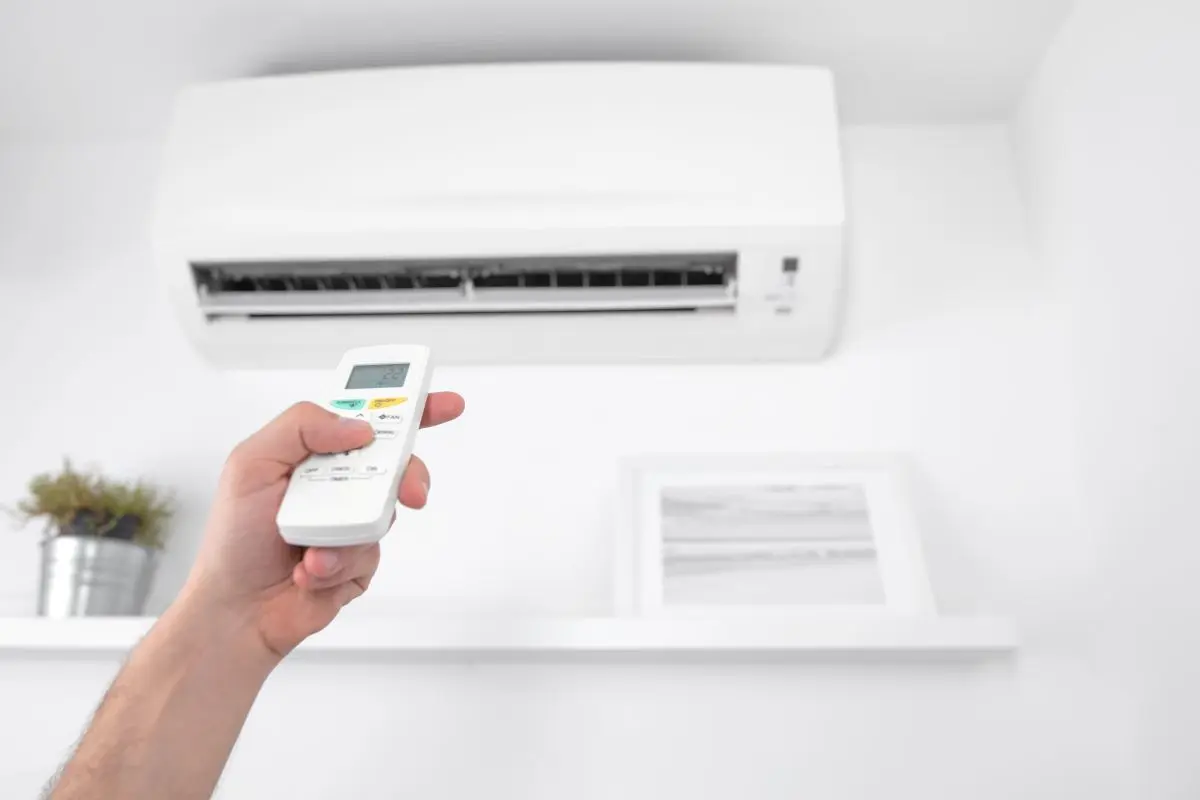
An air conditioner that suddenly stops cooling is usually responding to one of a handful of issues: a power problem, a thermostat problem, an airflow problem, or a refrigerant problem. Quick troubleshooting can confirm whether it is something you can fix or something a technician needs to handle.
What to Check First Before Calling a Technician
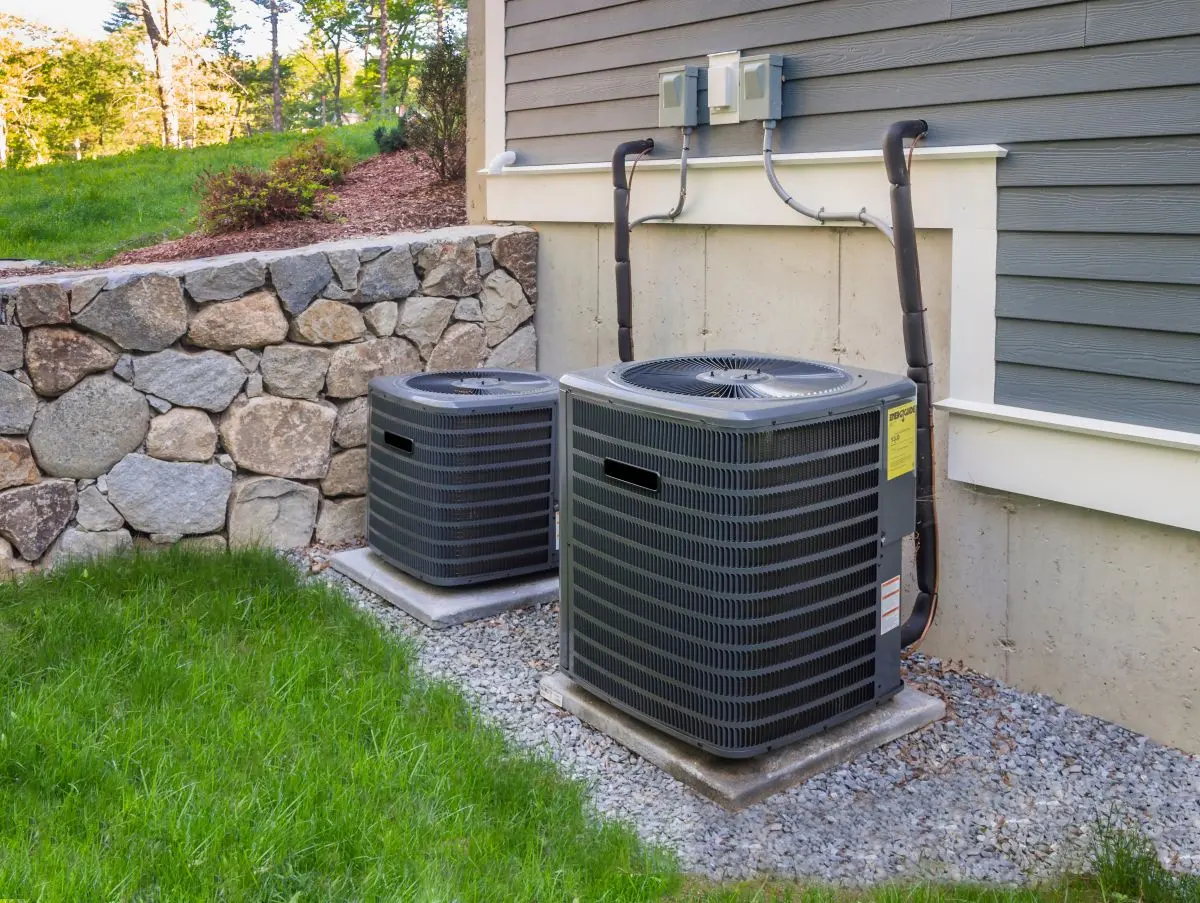
A short pre-call checklist can rule out the simplest causes in five minutes and save you a diagnostic fee. Start with the thermostat, then check power, then examine the filter, then inspect the outdoor unit. Roughly one in three “broken AC” calls turns out to be a tripped breaker, dead thermostat battery, or clogged filter that a homeowner can address without any tools. Confirming these basics first means a technician’s visit goes straight to the real problem rather than the obvious ones.
- Thermostat settings: Confirm it is set to “cool” and the target temperature is below room temperature.
- Thermostat batteries: Many digital thermostats fail silently when batteries die.
- Breaker panel: Look for tripped breakers labeled “AC,” “condenser,” or “air handler.”
- Air filter: A heavily clogged filter can stop airflow and trigger system shutdowns.
When DIY Stops and Professional Service Begins
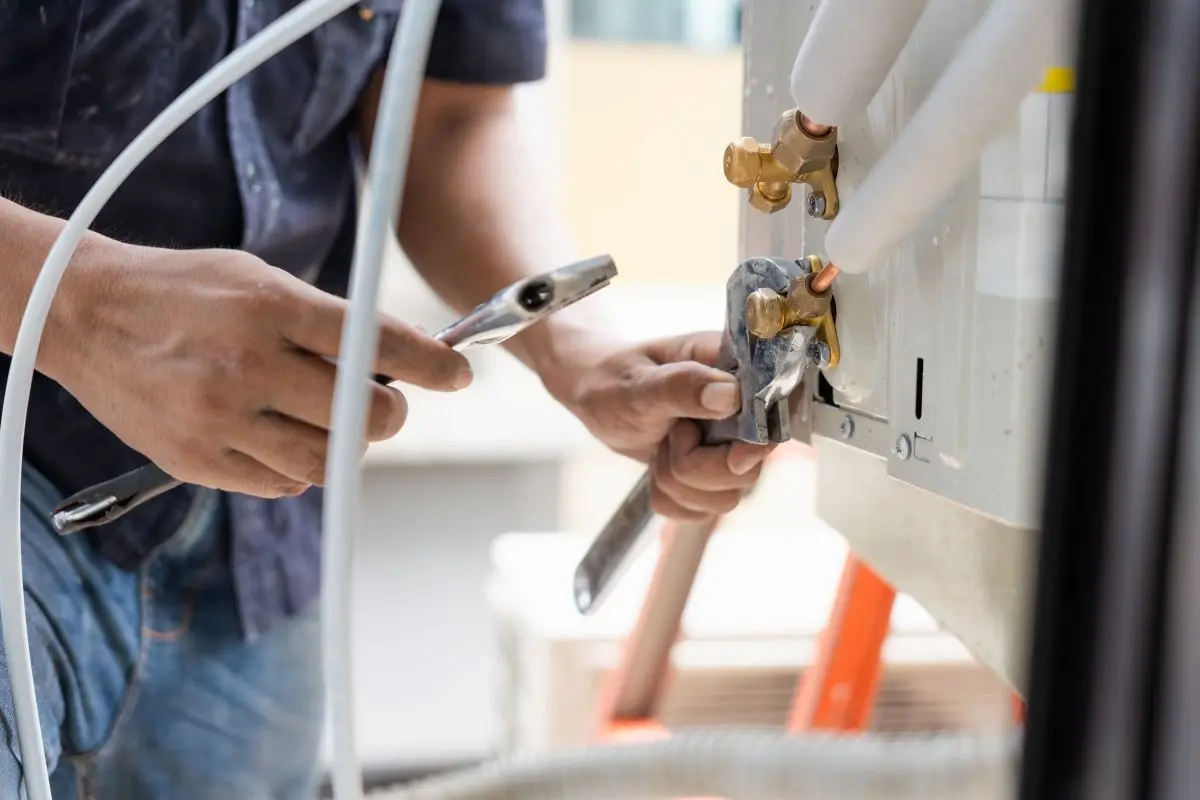
Some AC repairs are safe for homeowners, but most require tools, training, and EPA certification. Filter changes, condenser cleaning, thermostat battery swaps, and breaker resets are all reasonable DIY tasks. Anything involving refrigerant, electrical components, or sealed compressor work is regulated by federal law and demands a licensed HVAC technician. Attempting refrigerant work without certification carries fines, voids manufacturer warranties, and risks serious injury from high-pressure lines and electrical shock.
- Filter and debris work: Safe for homeowners and prevents many common failures.
- Thermostat replacement: Possible for handy homeowners but tricky on multi-stage systems.
- Refrigerant service: Requires EPA Section 608 certification and specialty gauges.
- Electrical repairs: Capacitors, contactors, and wiring carry significant shock risk.
5 Common Causes Your AC Is Not Working
The following five causes account for the vast majority of “AC not working” calls in residential homes. Each one has a clear set of symptoms, a likely fix, and a point at which a professional needs to step in.
1. Thermostat Settings or Battery Failure
Thermostat issues are the single most common reason an air conditioner appears broken when nothing is actually wrong with the equipment. A digital thermostat with dead batteries simply goes dark and stops sending the cooling signal, while a unit accidentally set to “heat” or “off” never engages the AC at all. Smart thermostats can also lose their schedule programming after a power outage, leaving the system idle when you expect it to cool. Replace standard AA batteries every 6 to 12 months, confirm the mode is set to “cool” with the setpoint well below room temperature, and verify the wiring at the base if the display stays blank. A thermostat replacement runs $150 to $400 installed, including labor.
- Dead batteries: Most thermostats use AA cells that fail without warning.
- Wrong mode: A unit set to “heat” or “off” will not call for cooling.
- Lost schedule: Smart thermostats sometimes lose programming after outages.
- Failed sensor: Older thermostats can misread room temperature by several degrees.
2. Tripped Breaker or Blown Fuse
A tripped breaker or blown fuse is the second most common cause and usually points to either a one-time surge or a developing electrical issue. Central AC systems typically have two breakers: one for the indoor air handler and a separate double-pole breaker for the outdoor condenser. Reset a tripped breaker once, and if it trips again immediately, stop and call a technician. Repeated trips signal a short circuit, a failing capacitor, or a compressor drawing too much current, all of which require professional diagnosis. Working on a 240-volt circuit is dangerous and should never be attempted without proper training.
- One-time trip: Often caused by a power surge or brief overload; resets cleanly.
- Repeat trips: Indicate a short, failing capacitor, or compressor problem.
- Blown fuse: Outdoor disconnects often contain replaceable cartridge fuses.
- GFCI issues: Some indoor units share circuits that can trip from unrelated faults.
3. Dirty Air Filter Restricting Airflow
A severely clogged air filter is one of the easiest problems to fix and one of the most common reasons an AC stops cooling effectively. According to the U.S. Department of Energy, dirty filters and coils can cause the system to malfunction and lead to premature compressor or fan failure. When airflow drops below a critical threshold, the evaporator coil can freeze, the high-pressure switch can trip the compressor, or the blower motor can overheat and shut down. Replace one-inch filters every 30 to 90 days, or more often in homes with pets, smokers, or heavy dust.
- Frozen coil: Restricted airflow causes ice buildup that blocks cooling entirely.
- High-pressure trip: Reduced airflow drives system pressures past safety limits.
- Blower overheating: Strained motors trip thermal limits and shut down.
- Premature wear: Long-term airflow restriction shortens compressor and motor life.
4. Frozen Evaporator Coil
A frozen evaporator coil presents as warm air from the vents, ice visible on the indoor unit’s copper lines, or water pooling near the air handler as the ice thaws. The most common causes are a dirty filter, a dirty coil, low refrigerant from a leak, or a failing blower motor that cannot move enough air across the coil. Turn the system off at the thermostat, let the ice melt completely (which can take 2 to 6 hours), and replace the filter before restarting. If the coil freezes again within a day or two, a technician needs to find the underlying cause, which is often a refrigerant leak.
- Dirty filter or coil: Reduces airflow below the threshold needed to prevent freezing.
- Low refrigerant: Drops coil temperature below freezing during normal operation.
- Blower problems: Weak airflow allows the coil to freeze even with clean filters.
- Closed registers: Too many shut vents can restrict return airflow systemwide.
5. Clogged Condensate Drain or Refrigerant Leak
A clogged condensate drain or a refrigerant leak can both shut down an air conditioner, but they look very different. Most modern systems include a float switch in the drain pan that cuts power when water backs up, which protects ceilings and floors from damage but leaves you without cooling. Clearing the line with a wet-dry vacuum at the outdoor cleanout often restores operation in minutes. A refrigerant leak, by contrast, presents as warm air, ice on the lines, or a hissing sound near the indoor coil, and it always requires a licensed technician with EPA Section 608 certification. Repair costs range from $200 to $1,500 depending on leak location and refrigerant type.
- Clogged drain line: Algae and debris block flow, triggering safety shutoffs.
- Refrigerant leak: Causes warm air, icing, or hissing near the indoor coil.
- Failed float switch: A stuck switch can shut down a system with a clear drain.
- Frozen drain trap: Rare in summer but possible in poorly insulated attic installs.
Frequently Asked Questions
Why Is My AC Running but Not Cooling?
An AC that runs without cooling is most often dealing with a frozen evaporator coil, low refrigerant, a dirty condenser, or a failed compressor. Check the air filter and outdoor unit first, then call a technician if the issue persists. Continued operation with no cooling can damage the compressor.
How Long Should I Wait Before Calling for Service?
If you have already checked the thermostat, breaker, and filter without success, call within 24 hours rather than waiting. Continued operation of a struggling AC often turns a $200 repair into a $1,500 one. In Republic and surrounding areas, summer demand can stretch scheduling, so earlier calls get earlier slots.
Can I Reset My AC Myself?
Yes, most central AC systems can be safely reset by turning the thermostat to off, switching off the breakers at the panel for 5 minutes, and then restoring power. If the system trips again or fails to restart, stop and call a professional rather than repeating the cycle.
How Much Does AC Repair Typically Cost?
Most common AC repairs run $150 to $1,500, with thermostats and capacitors at the lower end and refrigerant or motor work at the higher end. Diagnostic fees typically range from $75 to $150 and are often credited toward the repair if you proceed with service.
Is My AC Too Old to Repair?
If your system is over 12 years old and the repair quote exceeds $1,500, it is worth comparing replacement costs. New high-efficiency units typically pay back the price difference through lower energy bills within 5 to 8 years and qualify for federal tax credits and utility rebates in many cases.
Do I Need a Licensed HVAC Technician in Missouri?
Yes, Missouri requires HVAC technicians to hold proper licensing and EPA Section 608 certification for any work involving refrigerants. Using a licensed, insured contractor protects your home, your warranty, and your safety, and ensures repairs meet local code.
Trust Jameson Heating & Air When Your AC Is Not Working
When troubleshooting does not solve the problem, Jameson Heating & Air is the trusted choice for homeowners across Republic and surrounding areas. As a family owned and operated Rudd Pro Partner, we bring factory-trained expertise, transparent pricing, and a commitment to getting your cooling back online fast. Our team offers emergency repairs when you cannot wait, free estimates on new system replacements, financing options that fit any budget, and a maintenance program designed to prevent the breakdowns covered in this article. If your AC is not working and you need answers today, reach out to schedule a diagnostic visit and get expert advice on the right fix for your home.