Air Conditioning
No AC in a Heatwave? 8 Tips While Waiting For Emergency AC Repair
Emergency AC repair typically arrives within 2 to 24 hours in the Missouri area, so knowing exactly what to do during that window can protect your family from heat-related illness and keep your home tolerable while you wait. Whether you called for same-day AC repair five minutes ago or you are stuck waiting overnight for after-hours HVAC service, the eight CDC-backed tips below cover hydration, cooling tactics, and when to seek medical help.
- Fast repair guidance: Learn how to schedule emergency AC repair and what to expect on cost and timing.
- Safety tactics: Follow 8 CDC-backed tips for staying cool without air conditioning.
- Warning signs: Recognize heat exhaustion and heat stroke and know when to call 911.

How to Get Emergency AC Repair Fast
Emergency AC repair is same-day or next-day service from a licensed HVAC contractor for cooling system failures during hot weather. Getting on the schedule quickly is the single most important step, since same-day slots fill within hours during Missouri heatwaves.
How Fast Should You Call for Emergency AC Repair?
Call for emergency AC repair the moment you notice cooling has failed, not after trying to troubleshoot for an hour. Same-day slots in Aurora and surrounding areas typically book up by 10 AM during peak summer, so calling first thing in the morning or immediately when the failure occurs gives you the best chance of same-day service. When you call, describe the specific symptom (no cool air, breaker trips, unusual sounds, water leaks), when it started, and any troubleshooting you have already tried. That information helps the dispatcher route the right technician and often leads to faster diagnosis on-site.
- Call immediately: Do not wait to see if the AC self-corrects.
- Describe symptoms clearly: Warm air, no airflow, breaker trips, water, or sounds.
- Ask about ETA: Confirm the arrival window and stay reachable.
- Note your attempts: Filter change, breaker reset, thermostat check.
What Does Emergency AC Repair Cost?
Emergency AC repair typically costs $150 to $1,500 depending on the issue, with an additional $75 to $200 for after-hours or weekend service calls. Diagnostic fees usually run $75 to $150 and are often credited toward the repair when you proceed with service. Common repairs by price include capacitor replacement at $150 to $400, refrigerant leak repair at $400 to $1,500, blower motor replacement at $400 to $900, and compressor replacement at $1,500 to $3,500. Emergency call-out fees reflect the overtime labor rates and priority scheduling required to reach you same-day or after hours.
- Standard repair: $150 to $1,500 for most residential issues.
- After-hours premium: $75 to $200 added for evenings, weekends, holidays.
- Diagnostic fee: $75 to $150, often credited if you proceed with repair.
- Compressor and major repairs: $1,500 to $3,500 for high-cost failures.
Who Is Most at Risk When AC Fails?
Older adults, young children, and people with chronic medical conditions face the highest risk of heat-related illness when air conditioning fails during a heatwave. According to the Centers for Disease Control and Prevention, more than 700 people die from extreme heat every year in the United States, with these vulnerable populations accounting for the majority of deaths. Pregnant women, people on diuretics or psychiatric medications, and anyone with heart, kidney, or respiratory conditions also need extra attention during heat events. In the humid Missouri climate around Aurora, indoor heat index values can climb above 100°F within hours of cooling loss, making rapid emergency AC repair a genuine health concern.
- Adults over 65: Body temperature regulation weakens with age.
- Infants and young children: Cannot self-regulate temperature effectively.
- Chronic conditions: Heart, kidney, respiratory, and diabetes increase risk.
- Medications: Diuretics and psychiatric drugs reduce heat tolerance.
8 Tips to Stay Safe While Waiting for Emergency AC Repair
The following eight tactics come from CDC and National Weather Service heat safety guidance and cover hydration, cooling, and heat illness recognition. Prioritize them in order, starting with hydration and identifying the safest room in your home.
1. How Often Should You Drink Water Without AC?
Drink a full glass of cool water every 30 to 60 minutes when your AC is out during a heatwave, even if you do not feel thirsty. Thirst is a lagging indicator of dehydration, and by the time you feel it your body is already behind on fluids. Avoid alcohol, caffeine, and sugary drinks entirely, since all three accelerate fluid loss. Sports drinks with electrolytes help when sweating heavily for extended periods, but plain cool water is fine for most household situations. Keep a pitcher in the fridge and a cooler stocked with ice water in the main room where family members are gathered.
- Regular intervals: Full glass every 30 to 60 minutes minimum.
- Cool, not icy: Very cold water can trigger stomach cramps.
- Avoid dehydrating drinks: Alcohol, caffeine, and sugary sodas.
- Add electrolytes when needed: Sports drinks after heavy sweating.
2. How Do You Block Heat From the Sun?
Close blinds and curtains on every window facing the sun, especially south and west-facing windows during afternoon hours. Blocking solar gain is one of the fastest ways to slow indoor temperature rise when your AC has stopped working. Blackout curtains and reflective window film perform best, but standard blinds still block 40 to 60 percent of solar heat gain. In a pinch, hanging light-colored bedsheets, foil-backed cardboard, or emergency thermal blankets over sunny windows delivers similar protection. Missouri summer sun through unshaded south and west windows can raise indoor temperatures by 5 to 10 degrees within a few hours.
- South and west priority: These get the most afternoon sun exposure.
- Close before peak: Shade windows by mid-morning, before rooms heat up.
- DIY reflective options: Foil, cardboard, or emergency blankets in a pinch.
- Exterior shading: Awnings and exterior blinds block heat before it enters.
3. Which Room Stays Coolest When the AC Is Out?
The coolest room in most homes is the basement, followed by ground-floor rooms on the north or east side of the house. Ground temperatures stay steady year-round at about 55 to 65°F, which keeps basements 10 to 20 degrees cooler than upstairs during a heatwave. Concentrate family activities, sleeping, and pets in that coolest space to reduce cooling needs across the whole house. Bring water, phones, chargers, books, and any medications into the room so no one has to spend extended time in hotter areas. Homes without basements should identify the coolest interior room and set it up the same way.
- Basements first: Naturally cool, best refuge during a Missouri heatwave.
- North and east rooms: Avoid direct sun through most of the day.
- Ground floors beat upstairs: Heat rises, so second floors get hottest.
- Consolidate activities: Reduce body heat spread across the whole home.
4. Do Fans Actually Help Without AC?
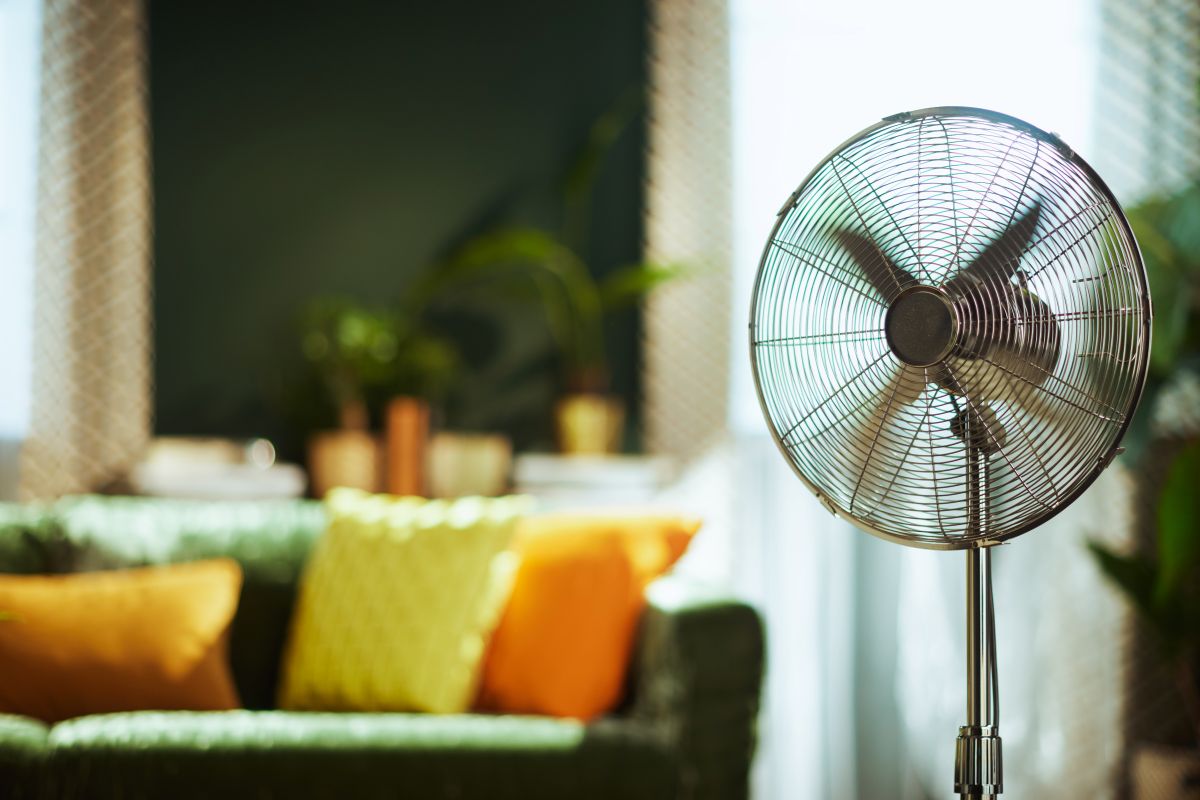
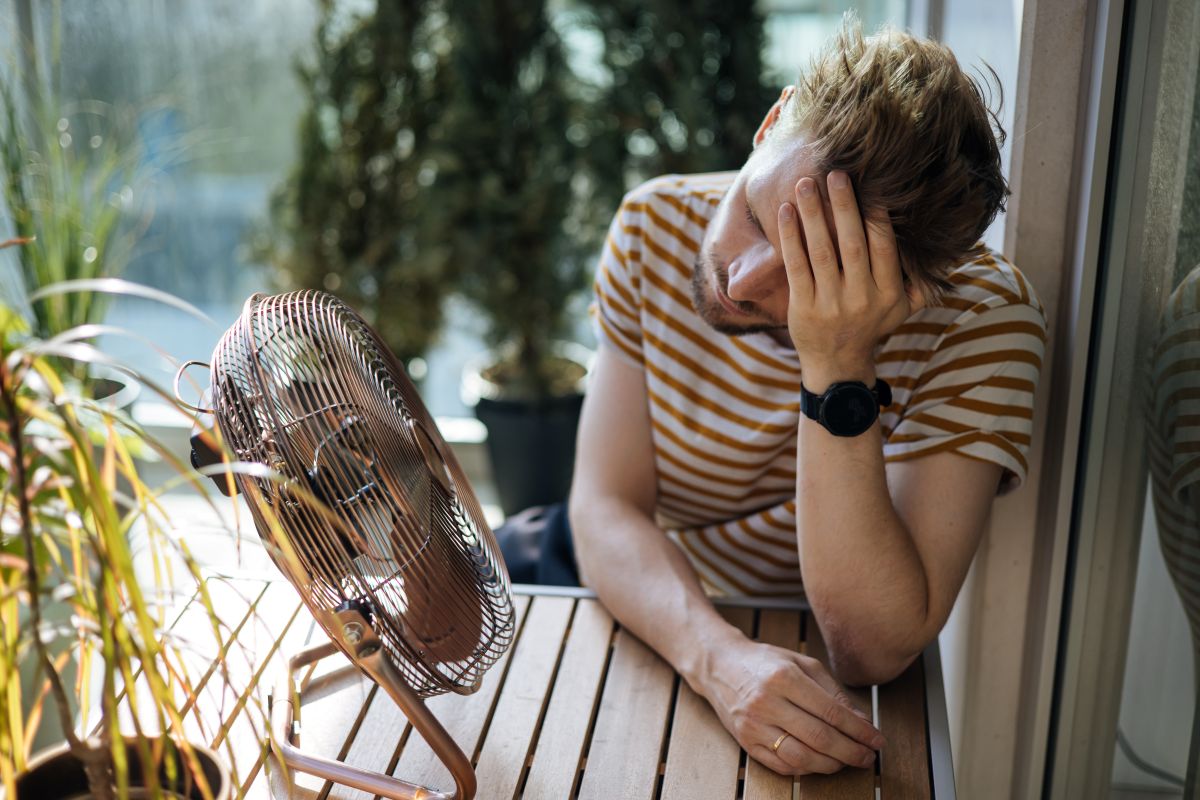
Fans do not lower indoor air temperature, but they help sweat evaporate from your skin, which cools your body directly. Point box fans and floor fans toward occupied areas rather than empty spaces, and set ceiling fans to rotate counterclockwise in summer for a cooling downdraft. Once outdoor temperatures drop below indoor temperatures in the evening, create cross-ventilation by placing a box fan in a window facing outward on the hot side of the home and opening a window on the cool side. Important safety note: fans provide little cooling benefit once indoor temperatures exceed 95°F and can actually raise body temperature at that point, which is when moving to a cooling center becomes safer.
- Direct at people: Point fans toward occupants, not empty rooms.
- Cross ventilation: Exhaust hot side, intake cool side, once evening arrives.
- Ceiling fans counterclockwise: Creates downward cooling airflow in summer.
- Fan limit: Above 95°F indoor, fans stop providing safe cooling.
5. How Do Cool Showers and Compresses Help?
Cool showers and cold compresses lower core body temperature faster than any other tactic available at home. Take a cool (not cold) shower or bath every 2 to 4 hours during extreme heat to reset your body temperature. Between showers, apply cold compresses to the neck, wrists, and forehead, since these areas cool blood as it passes just below the skin. Ice packs wrapped in a thin towel and pressed against pulse points at the wrists, neck, and ankles work particularly well because they cool the blood supply going to the brain. A spray bottle of cool water misted onto exposed skin while a fan blows across it produces evaporative cooling that can drop skin temperature by 5 to 10 degrees.
- Cool showers every 2 to 4 hours: Reset core body temperature.
- Pulse points: Wrists, neck, and ankles cool blood most efficiently.
- Mist and fan: Evaporative cooling from wet skin plus airflow.
- Not ice-cold: Extreme cold can trigger cardiovascular stress.
6. Which Appliances Should You Turn Off?
Turn off every heat-generating appliance in your home until emergency AC repair is completed. The oven, stovetop, dishwasher, dryer, and even TVs and computers add heat that your cooling system cannot remove. Eat cold meals like sandwiches, salads, and cold cuts instead of cooking, and delay laundry until AC service is restored. Turn off lights you are not actively using, and unplug idle electronics that generate heat even in standby mode. Small heat sources add up quickly in a home that cannot reject any of that heat outdoors.
- Skip cooking: Cold meals only until AC repair is complete.
- Delay laundry: Dryers add substantial heat, even when vented.
- Kill idle electronics: TVs and computers generate heat in standby.
- Turn off unused lights: Especially incandescent and halogen bulbs.
7. What Should You Wear Without AC?
Wear loose, lightweight, light-colored clothing made from breathable fabrics like cotton or linen when your AC has failed during a heatwave. Dark colors absorb heat, tight fabrics trap sweat, and synthetic materials often prevent evaporation, all of which reduce your body’s ability to cool itself. Change clothes when they become soaked with sweat, since wet clothing loses breathability. In private spaces at home, minimal clothing is entirely reasonable if it helps you stay cool, especially for children and older adults who are most sensitive to heat.
- Light colors: Reflect sunlight rather than absorb it.
- Loose fit: Allows air circulation and sweat evaporation.
- Natural fibers: Cotton and linen breathe better than polyester.
- Change when wet: Soaked clothing loses cooling effect.
8. When Should You Call 911 for Heat Illness?
Call 911 immediately for any signs of heat stroke: a body temperature of 103°F or higher, hot dry or damp skin, a fast strong pulse, confusion, dizziness, headache, nausea, or loss of consciousness. Heat stroke is a life-threatening medical emergency and cannot wait for the emergency AC repair to arrive. Heat exhaustion, which presents as heavy sweating, weakness, cool clammy skin, and a fast weak pulse, is less severe but still requires immediate action: move the person to a cool place, apply cool compresses, and offer water in small sips. If heat exhaustion symptoms worsen or fail to improve within 30 minutes, call 911. Missouri counties often open designated cooling centers during declared heat emergencies, and local emergency management offices maintain updated lists.
- Heat stroke: 911 immediately: 103°F+ temperature, confusion, hot skin.
- Heat exhaustion signs: Heavy sweating, weakness, cool clammy skin.
- Cooling centers: Public libraries and county centers offer refuge.
- Do not wait for repair: Medical emergencies come before HVAC.
Frequently Asked Questions
How Fast Can I Get Emergency AC Repair in Aurora?
Emergency AC repair in Aurora and surrounding areas typically arrives within 2 to 24 hours, depending on time of day and current call volume. Same-day service is standard during business hours, while after-hours repairs may be scheduled for the following morning during peak heatwaves. Priority customers with maintenance agreements usually get faster response than first-time callers.
How Much Does Same-Day AC Repair Cost?
Same-day AC repair typically runs $150 to $1,500 depending on the issue, with an additional $75 to $200 for after-hours or weekend service. Common repairs like capacitor and contactor replacement fall at the lower end, while refrigerant, motor, and compressor work sit at the higher end. Diagnostic fees typically range from $75 to $150 and are often credited toward the repair.
What Should I Do Before the Technician Arrives?
Turn off the system at the thermostat, clear access to the outdoor condenser, replace the air filter if it is dirty, and have your service history or warranty paperwork ready. Note any specific symptoms and when they started so the technician can go straight to diagnosis. These simple steps often save 15 to 30 minutes of diagnostic time.
Should I Leave the House During a Heatwave With No AC?
Yes, when indoor temperatures exceed 90°F or anyone in the home is showing signs of heat-related illness, moving to a cooler location is the safest choice. Public libraries, shopping malls, movie theaters, and community centers offer air-conditioned refuge. Many Missouri counties open designated cooling centers during declared heat emergencies.
Is It Safe to Sleep Without AC During a Missouri Heatwave?
Sleeping without AC is generally safe if you take proper precautions: move to the coolest room, use fans for circulation, keep water bedside, and choose light bedding. Take a cool shower before bed to lower body temperature. If indoor temperatures exceed 85°F at night, especially with vulnerable family members, staying at a cooling center or with friends or family with AC is safer.
Do I Need a Licensed Contractor for Emergency AC Repair?
Yes, Missouri requires licensed HVAC contractors with EPA Section 608 certification for any work involving refrigerants. Emergency service from an unlicensed handyman risks voiding your manufacturer warranty, violating federal environmental regulations, and getting a repair that does not actually solve the problem. Always verify licensing before authorizing work.
Trust Jameson Heating & Air for Fast Emergency AC Repair
When your cooling system fails during a Missouri heatwave, Jameson Heating & Air is the trusted choice for emergency AC repair across Aurora and surrounding areas. As a family owned and operated Rudd Pro Partner, we prioritize same-day emergency service during peak summer conditions because we know how quickly a home without AC becomes uncomfortable and, for vulnerable family members, potentially dangerous. Our team offers 24/7 emergency AC repair to restore cooling fast, free estimates on new system replacements when equipment is past its useful life, financing options that make major repairs affordable, and a maintenance program that helps prevent the breakdowns that cause emergency calls in the first place. If your AC has failed and you need emergency AC repair today, reach out immediately to get on the schedule and get your family back to safe, comfortable temperatures.