
Air Conditioning
How To Clean AC Unit Safely & Efficiently (6 Steps)
Knowing how to clean ac unit components yourself is one of the simplest ways to improve efficiency, lower energy bills, and extend the life of your cooling system. A seasonal cleaning takes about an hour, requires only basic tools, and tackles the dust and debris that force your air conditioner to work harder than it should.
- Safe method: Follow a step-by-step process that protects both you and your equipment.
- Real results: Learn how a simple cleaning restores lost cooling efficiency and cuts energy costs.
- Local expertise: Discover why Nixa homeowners trust Jameson Heating & Air for deeper service.

Why Cleaning Your AC Unit Matters
A clean air conditioner runs more efficiently, cools more effectively, and lasts longer than one left to collect dirt and debris. Regular cleaning is one of the highest-value maintenance tasks a homeowner can perform without special tools or training.
How a Dirty AC Costs You Money
A dirty air conditioner wastes energy because dust and debris block the heat transfer that cooling depends on. When the condenser coils outside are coated in pollen, grass clippings, and dirt, or the evaporator coil inside is layered with dust, the system has to run longer to reach the same temperature. According to ENERGY STAR, dirty evaporator and condenser air conditioning coils reduce the system’s ability to cool your home and cause the system to run longer, which increases energy costs and reduces the life of the equipment. That extra runtime drives up your summer electric bills and accelerates wear on the compressor and blower motor.
- Higher bills: Dirty coils force longer run times and higher energy use.
- Reduced cooling: Blocked airflow lowers the system’s cooling capacity.
- Shorter lifespan: Extra strain wears out the compressor and motor faster.
- Poor air quality: Dust buildup circulates through your home’s air.
What Nixa Homeowners Should Know Before Cleaning
Homeowners in Nixa and surrounding areas deal with a cleaning challenge driven by the region’s climate and vegetation. Spring tree pollen, summer cottonwood fluff, and grass clippings from frequent mowing all collect on outdoor condenser units faster than in drier climates. Humid Missouri summers also mean the system runs hard for months, so a clean unit makes a real difference on both comfort and cost. Plan to clean your outdoor unit in spring before cooling season begins and check it again midsummer.
- Spring pollen: Ozark tree pollen clogs condenser fins within weeks.
- Cottonwood and grass: Summer debris collects quickly on outdoor units.
- Humid climate: Long Missouri cooling seasons reward a clean system.
- Timing: Clean in spring, then check again midsummer.
6 Steps to Clean Your AC Unit Safely
The following six steps walk you through a complete, safe AC cleaning from start to finish. Follow them in order, and never skip the power shutoff in step one, since the outdoor unit runs on 240-volt power that can cause serious injury.
1. Shut Off Power to the Unit
Cutting power to your air conditioner before cleaning is the single most important safety step and must never be skipped. Turn off the system at the thermostat, then locate the outdoor disconnect box mounted on the wall near the condenser and pull the disconnect or flip the switch to off. For added safety, switch off the dedicated AC breaker in your main electrical panel as well. The outdoor condenser runs on 240-volt power and contains a capacitor that can hold a dangerous charge, so confirming the unit is completely dead before touching any component protects you from serious electrical shock.
- Thermostat off: Set the system to off before heading outside.
- Pull the disconnect: The outdoor box near the condenser cuts local power.
- Flip the breaker: Switch off the AC breaker in the main panel too.
- Confirm it is dead: Verify no power before removing any panels.
2. Clear Debris From Around the Outdoor Unit
Clearing the area around your outdoor condenser restores the airflow the system needs to reject heat efficiently. Remove leaves, grass clippings, sticks, and any trash that has collected around the base and against the sides of the unit. Trim back shrubs, tall grass, and overhanging branches to maintain at least two feet of clearance on all sides, which gives the condenser fan room to pull air through the coils. In the Nixa and surrounding areas climate, cottonwood fluff and pollen build up fast, so clearing debris is often the single most impactful cleaning step you can take each season.
- Remove loose debris: Clear leaves, grass, and trash from the base.
- Trim vegetation: Cut back shrubs and branches for airflow.
- Two-foot clearance: Keep all sides of the unit open and unobstructed.
- Check the top: Remove anything resting on the fan grille.
3. Clean the Condenser Coils and Fins
Cleaning the outdoor condenser coils removes the dirt layer that blocks heat transfer and forces the system to work harder. Start by gently removing loose debris from the fins with a soft brush, working in the direction of the fins to avoid bending them. Then use a garden hose with a spray nozzle on a moderate setting to rinse the coils from the inside out, pushing dirt back out the way it came in rather than driving it deeper. For heavy buildup, a dedicated no-rinse foaming coil cleaner from a hardware store makes the job easier. Never use a pressure washer, which bends the delicate aluminum fins and damages the coil.
- Soft brush first: Remove loose dirt in the direction of the fins.
- Rinse inside out: Spray from within the cabinet outward through the coils.
- Coil cleaner for buildup: No-rinse foaming cleaners handle heavy grime.
- No pressure washers: High pressure bends fins and damages the coil.
4. Straighten Bent Fins and Clean the Evaporator Coil
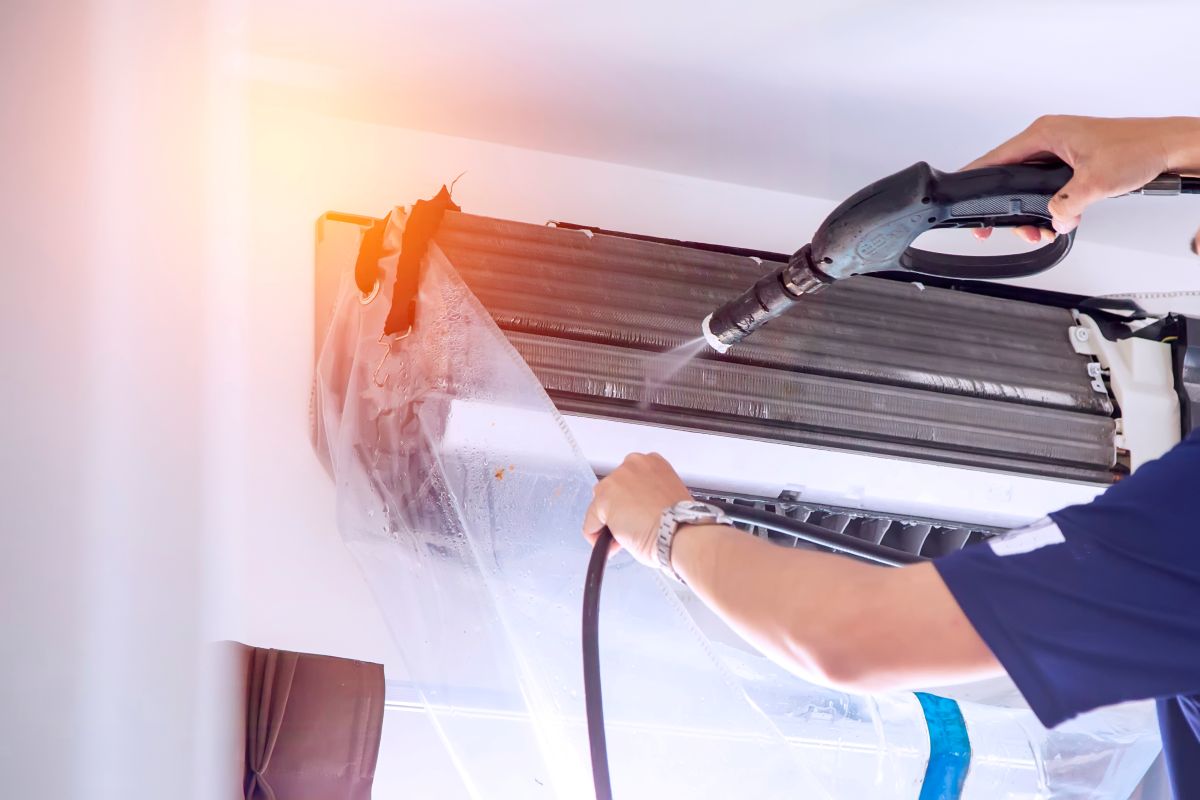
Straightening bent fins and cleaning the indoor evaporator coil restores airflow on both sides of the system. Bent condenser fins restrict airflow, and a fin comb, available for under $20, straightens them in a few passes when matched to your fin spacing. Inside the home, the evaporator coil sits in the air handler or furnace cabinet and collects dust that insulates the coil and reduces cooling. Access it by removing the coil access panel, then apply a no-rinse foaming evaporator coil cleaner that drains away through the condensate system. If the indoor coil is severely dirty or hard to reach, this is a good task to leave to a professional.
- Fin comb repair: Straightens bent condenser fins in a few passes.
- Access the coil: Remove the evaporator access panel on the indoor unit.
- No-rinse cleaner: Foaming evaporator cleaner drains through the system.
- Know your limits: Leave hard-to-reach indoor coils to a pro.
5. Clear the Condensate Drain Line
Clearing the condensate drain line prevents the water backups that cause shutdowns and water damage during humid Missouri summers. The drain line carries moisture the evaporator coil removes from the air, and over time algae and mold clog the line, triggering the float switch to shut the system down or causing water to overflow the drain pan. Locate the drain line where it exits near the outdoor unit, then attach a wet/dry vacuum to the end and run it for 30 to 60 seconds to pull out the clog. Flushing the line with a cup of distilled vinegar every few months helps prevent future buildup.
- Find the drain: The PVC line typically exits near the outdoor unit.
- Vacuum the clog: A wet/dry vac clears the line in under a minute.
- Vinegar flush: A cup of vinegar every few months prevents buildup.
- Check the pan: Make sure the drain pan is empty and draining.
6. Replace the Air Filter and Restore Power
Replacing the air filter and restoring power completes the cleaning and gets your system running at peak efficiency. A clean filter protects the newly cleaned evaporator coil from fresh dust and maintains the airflow the system needs, so install a new filter of the correct size with the airflow arrow pointing toward the blower. Once the filter is in place and all access panels are secured, restore power at the breaker and the outdoor disconnect, then turn the system back on at the thermostat. Let it run for 15 to 20 minutes and confirm cool air at the supply registers to verify everything is working properly.
- Fresh filter: Install the correct size with the arrow toward the blower.
- Secure panels: Confirm all access covers are back in place.
- Restore power: Re-engage the breaker and outdoor disconnect.
- Test the system: Run it 15 to 20 minutes and check for cool air.
Frequently Asked Questions
How Often Should I Clean My AC Unit?
Clean your outdoor condenser unit at least once per year in spring before cooling season, and check it again midsummer in high-debris areas. Air filters need checking monthly and replacement every 1 to 3 months. The indoor evaporator coil typically needs cleaning once a year, often handled during a professional tune-up.
Can I Clean My AC Unit Myself?
Yes, homeowners can safely clear debris, rinse condenser coils, straighten fins, flush the condensate drain, and replace filters without special training. Always shut off power first. Tasks involving refrigerant, electrical repairs, or deep internal cleaning require an EPA Section 608 certified technician.
What Should I Use to Clean AC Coils?
Use a soft brush and a garden hose on a moderate setting for outdoor condenser coils, or a no-rinse foaming coil cleaner for heavier buildup. Never use a pressure washer, which bends the aluminum fins. For indoor evaporator coils, use a foaming evaporator coil cleaner designed to drain through the condensate system.
Will Cleaning My AC Lower My Energy Bills?
Yes, cleaning dirty coils and replacing a clogged filter can recover a meaningful share of lost efficiency, since dirty coils force the system to run longer. Combined with clear airflow around the outdoor unit, a thorough seasonal cleaning often produces noticeable savings across a full Missouri cooling season.
Is It Safe to Spray Water on My AC Unit?
Yes, spraying water on the outdoor condenser coils is safe and recommended, as long as you shut off power first. Use a garden hose on a moderate setting and rinse from the inside out. Never use a pressure washer, and keep water away from the electrical components and disconnect box.
When Should I Call a Professional Instead?
Call a professional for annual tune-ups, refrigerant issues, electrical problems, or any cleaning that requires opening sealed components. Warning signs like warm air, ice on the coils, hissing sounds, or repeated breaker trips all indicate issues beyond basic cleaning that require a licensed technician.
Trust Jameson Heating & Air for Expert AC Service
When your cleaning uncovers a problem or you want a deeper professional service, Jameson Heating & Air is the trusted choice for homeowners across Nixa and surrounding areas. As a family owned and operated Ruud Pro Partner, we bring factory-trained expertise, EPA-certified refrigerant handling, and honest recommendations to every service call. Our team offers emergency repairs when your system fails on a hot afternoon, free estimates on new system replacements, financing options that fit any budget, and a maintenance program that handles the deep cleaning and professional tune-ups this article cannot cover. If your AC needs more than a seasonal rinse, reach out today to schedule service and keep your system running at its best.