HVAC
HVAC Inspection: 6 Causes Your Energy Bills Are Increasing
If your utility costs keep climbing each month, a professional hvac inspection is the fastest way to pinpoint where energy and money are slipping away. Most homeowners are shocked to learn how many small, fixable issues quietly drive monthly bills 20 percent or more above where they should be.
- Hidden inefficiencies: Identify the six most common heating and cooling problems that inflate utility costs.
- Real numbers: See typical efficiency losses, repair price ranges, and payback timelines.
- Local know-how: Learn why Nixa homeowners rely on Jameson Heating & Air for thorough diagnostics.
Why Your HVAC System Drives Energy Costs
Heating and cooling equipment accounts for nearly half of the energy used in a typical home, which makes it the highest-leverage system to maintain. Even small efficiency losses translate quickly into noticeable monthly bill increases. Routine inspections are essential for identifying potential issues early, allowing homeowners to address minor problems before they escalate into major failures and costly repairs.
Skipping HVAC maintenance can lead to a loss of about 5% efficiency per year and reduce the system’s lifespan by up to 50%.
How Efficiency Losses Compound Over Time
A new air conditioner or furnace operates at peak efficiency for the first few seasons, but dust, wear, and minor faults gradually erode performance. A system rated at 16 SEER can drop to an effective 11 or 12 SEER within five years if maintenance is neglected. That decline shows up as longer run times, higher amperage draw, and steadily rising electric or gas bills. Most homeowners do not notice the decline because it happens slowly, but a comparison of last summer’s bills against the current ones often reveals the trend.
- Coil fouling: Dirty evaporator and condenser coils reduce heat transfer and force longer cycles.
- Refrigerant drift: Even small undercharges cut cooling capacity and raise electrical use.
- Component wear: Aging motors, capacitors, and contactors draw more power than new parts.
- Filter neglect: Restricted airflow forces blowers to work harder for the same delivery.
What Nixa Homeowners Should Watch For
Homes in Nixa and surrounding areas face long cooling seasons and cold winter snaps that put steady demand on heating and cooling equipment. That sustained workload means efficiency losses translate quickly into higher bills, and small problems compound faster than in milder climates.
- Year-over-year jumps: Compare same-month bills to spot creeping inefficiency.
- Uneven rooms: Hot or cold spots usually point to airflow or duct issues.
- Long run times: A system that rarely cycles off is fighting losses somewhere.
- Higher humidity: Sticky indoor air during cooling season suggests sizing or refrigerant issues.
6 Causes Your Energy Bills Are Increasing
The following six causes account for the vast majority of unexplained utility bill increases in residential homes. A thorough inspection checks each one and produces a prioritized fix list based on cost and savings impact.
1. Leaky or Poorly Sealed Ductwork
Leaky ductwork is one of the largest hidden drains on home energy, and most homeowners have no idea how much conditioned air they are losing. Supply ducts run through attics, crawlspaces, and wall cavities where joints separate, mastic dries out, and rodents create new openings over time. According to ENERGY STAR, sealing and insulating ducts can improve the efficiency of a home’s heating and cooling system by as much as 20 percent, and sometimes much more. Sealing those leaks with mastic or foil tape typically pays back within two to three cooling seasons through lower bills and improved comfort.
- Joint separation: Sheet metal connections loosen over years of expansion and contraction.
- Failed mastic: Older sealant becomes brittle and cracks, opening hidden gaps.
- Crushed flex duct: Damaged flexible runs restrict airflow and create leak points.
- Disconnected runs: Branch ducts can pull free entirely in attics and crawlspaces.
2. Dirty Air Filters and Clogged Coils
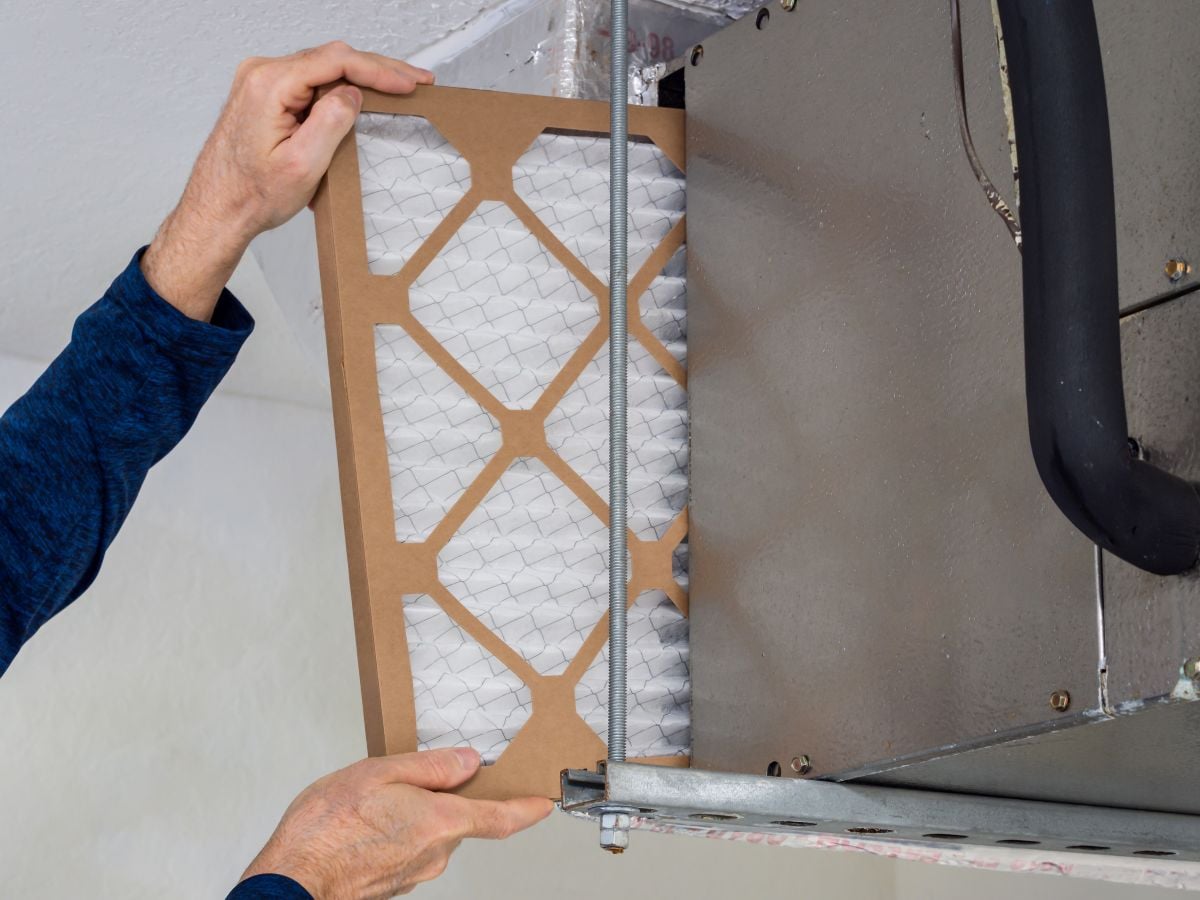
A neglected air filter is the simplest and most common cause of rising energy bills, and the fix takes five minutes. Dirty filters restrict airflow across the evaporator coil, which forces the blower motor to work harder and reduces the system’s ability to remove heat. The same buildup migrates onto the coil itself, where dust insulates the metal fins and cuts heat transfer significantly. Replacing a one-inch filter every 30 to 90 days and scheduling annual coil cleaning can recover 5 to 15 percent of lost cooling efficiency in many homes.
- Restricted airflow: Clogged filters cut blower output and strain the motor.
- Coil insulation: Dust on fins blocks heat transfer and lengthens run times.
- Frozen evaporator: Severe restriction can ice the coil and shut the system down.
- Premature wear: Higher static pressure shortens motor and bearing life.
3. Low or Leaking Refrigerant Charge
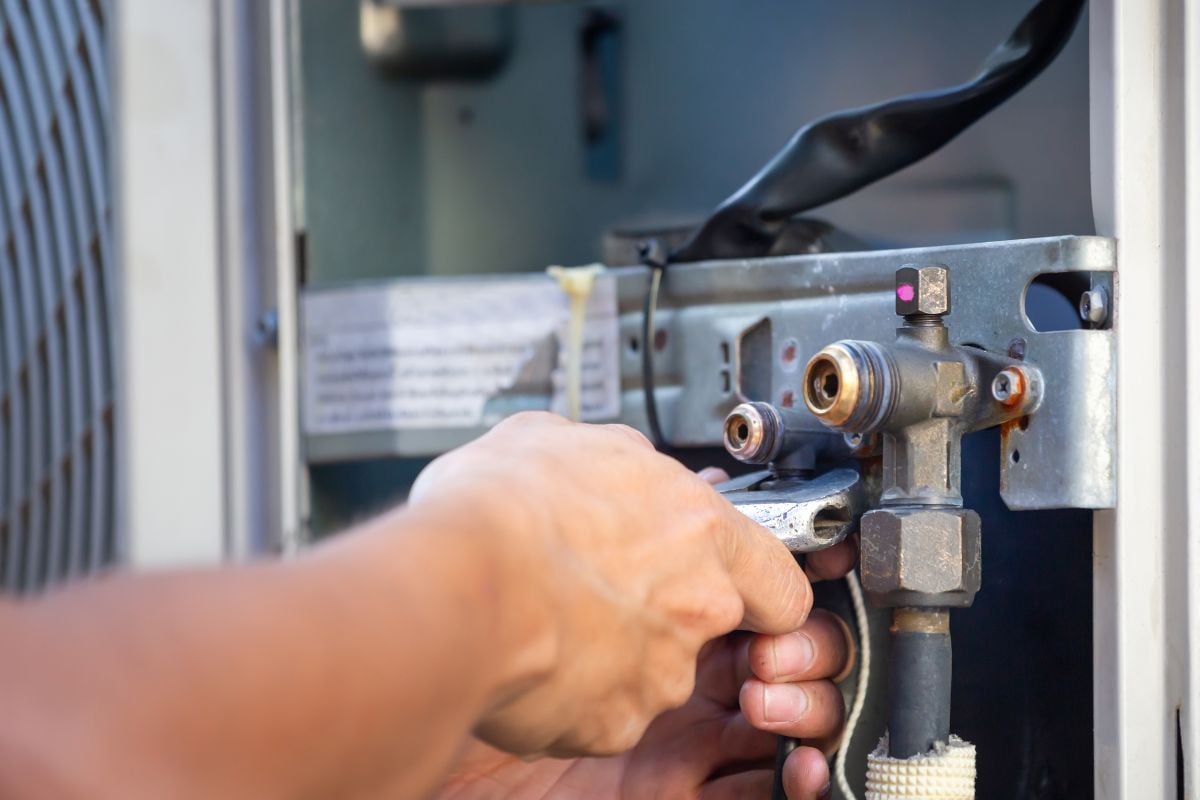
A refrigerant leak quietly raises bills long before the system stops cooling, because an undercharged AC simply runs longer to reach setpoint. Refrigerant does not get consumed during normal operation, so any drop in charge points to a leak that needs sealing. Common leak points include the evaporator coil, the line set fittings, and the Schrader service valves. Chasing the leak, repairing it, and recharging to factory specification typically costs $400 to $1,500 depending on location and refrigerant type, but the savings on monthly bills usually justify the work within a single cooling season.
- Coil leaks: Pinhole corrosion on aluminum evaporators is a common cause of slow loss.
- Fitting leaks: Vibration loosens flare and braze joints over time.
- Valve leaks: Schrader cores wear out and seep refrigerant slowly.
- Higher amperage: Undercharged compressors draw more power for less cooling.
4. Aging or Improperly Sized Equipment
Equipment age and improper sizing both drive significant efficiency losses that no amount of tuning can recover. Furnaces lose efficiency as heat exchangers scale and burners drift out of spec, and air conditioners gradually lose capacity as compressors wear. It is essential to inspect both the heating system and cooling systems during an HVAC inspection to ensure safety and efficiency. For example, cracked heat exchangers in furnaces are a critical safety defect that can allow dangerous combustion gases, such as carbon monoxide, into living spaces. Equally common is the oversized system that short-cycles, never running long enough to dehumidify or maintain steady comfort, while the undersized system runs continuously and never satisfies the thermostat. A proper Manual J load calculation during replacement ensures correct sizing, often improving efficiency 15 to 25 percent over a poorly matched older system.
- Heat exchanger scaling: Furnaces lose AFUE rating as exchangers age and foul.
- Cracked heat exchangers: Critical safety defect that can allow combustion gases into living spaces.
- Compressor wear: Aging compressors deliver less cooling per kilowatt-hour.
- Oversizing: Short cycles waste energy and prevent proper humidity control.
- Undersizing: Continuous operation drives bills up while comfort suffers.
5. Faulty Thermostats and Control Issues
A miscalibrated or failing thermostat can quietly add 10 percent or more to monthly bills by overshooting setpoints or running equipment when it should be idle. Older mechanical thermostats lose accuracy as bimetallic strips age, and electronic models can develop sensor drift that misreads room temperature by several degrees. Smart and programmable thermostats add scheduling control that typical households use to save 8 to 10 percent on heating and cooling, but only when programmed correctly. An inspection verifies thermostat accuracy, wiring integrity, and programming alignment with the home’s actual occupancy patterns. During an HVAC inspection, professionals also check electrical connections and other critical components, catching loose or corroded wires, failing capacitors, and unstable connections that pose fire risks.
- Sensor drift: Aging thermostats misread room temperature by several degrees.
- Wiring faults: Loose or corroded connections cause erratic operation.
- Poor placement: Units in direct sun or near vents read inaccurate temperatures.
- Missing schedules: Unprogrammed setbacks waste energy during sleep and work hours.
6. Poor Insulation and Air Sealing
Weak insulation and uncontrolled air leakage in the building envelope force heating and cooling equipment to fight a losing battle against outdoor conditions. Attic insulation below R-38, missing weatherstripping, gaps around recessed lights, and unsealed rim joists all bleed conditioned air around the clock. Most older homes in Nixa and surrounding areas were built to insulation standards well below current code, and adding attic insulation alone often delivers payback within three to five years. An HVAC inspection will flag obvious envelope issues and recommend whole-home assessments when warranted. Additionally, inspections assess ventilation and proper airflow by evaluating air distribution systems, ensuring HVAC filters and ductwork are clean. This helps reduce allergens, dust, and potential mold growth, supporting healthy indoor air quality.
- Thin attic insulation: R-values below current code waste heating and cooling year-round.
- Air leaks: Gaps around fixtures, plumbing, and rim joists drive infiltration losses.
- Failed weatherstripping: Worn door and window seals leak conditioned air.
- Missing rim joist insulation: Basement headers are a common overlooked weak point.
Frequently Asked Questions
How Much Does an HVAC Inspection Cost?
A standard residential HVAC inspection in the Nixa and surrounding areas market typically runs $75 to $200, depending on system complexity and whether testing extends to ductwork. Many maintenance plans include the inspection at no extra cost as part of an annual service agreement.
How Long Does an HVAC Inspection Take?
A thorough inspection of a single residential system takes 60 to 90 minutes. Homes with multiple zones, complex ductwork, or older equipment may require two hours or more. The technician will walk through findings before leaving so you understand any recommended repairs.
How Often Should I Schedule an HVAC Inspection?
Industry guidance and most manufacturer warranties call for one inspection per year, ideally split between a spring cooling check and a fall heating check on dual-system homes. Yearly inspection preserves warranty coverage and catches small problems before they grow.
Can I Inspect My HVAC System Myself?
Homeowners can change filters, clear debris around the outdoor unit, and listen for unusual noises, but full inspections require specialized gauges, electrical meters, and combustion analyzers. Refrigerant work also requires EPA Section 608 certification by federal law.
Will an HVAC Inspection Lower My Energy Bills?
Yes, in most cases an inspection followed by recommended tune-up work recovers 5 to 20 percent of lost efficiency. The exact savings depend on system age, current condition, and how long maintenance has been deferred.
Is an HVAC Inspection Required Before Buying or Selling a Home?
Most home sales include a general home inspection that covers HVAC at a basic level, but a dedicated HVAC inspection provides far more detail. Buyers and sellers in the Nixa and surrounding areas market often request one to avoid surprises at closing.
Trust Jameson Heating & Air for a Thorough HVAC Inspection
When your energy bills keep climbing and you cannot pinpoint why, Jameson Heating & Air is the trusted choice for homeowners across Nixa and surrounding areas. As a family owned and operated Rudd Pro Partner, we deliver detailed inspections, transparent findings, and clear cost-benefit recommendations so you know exactly where your money is going. Our team offers emergency repairs, free estimates on new system replacements, financing options to make upgrades affordable, and a maintenance program designed to protect efficiency year after year. If your utility bills are climbing and you want answers, reach out today to schedule your inspection and start cutting costs with confidence.